
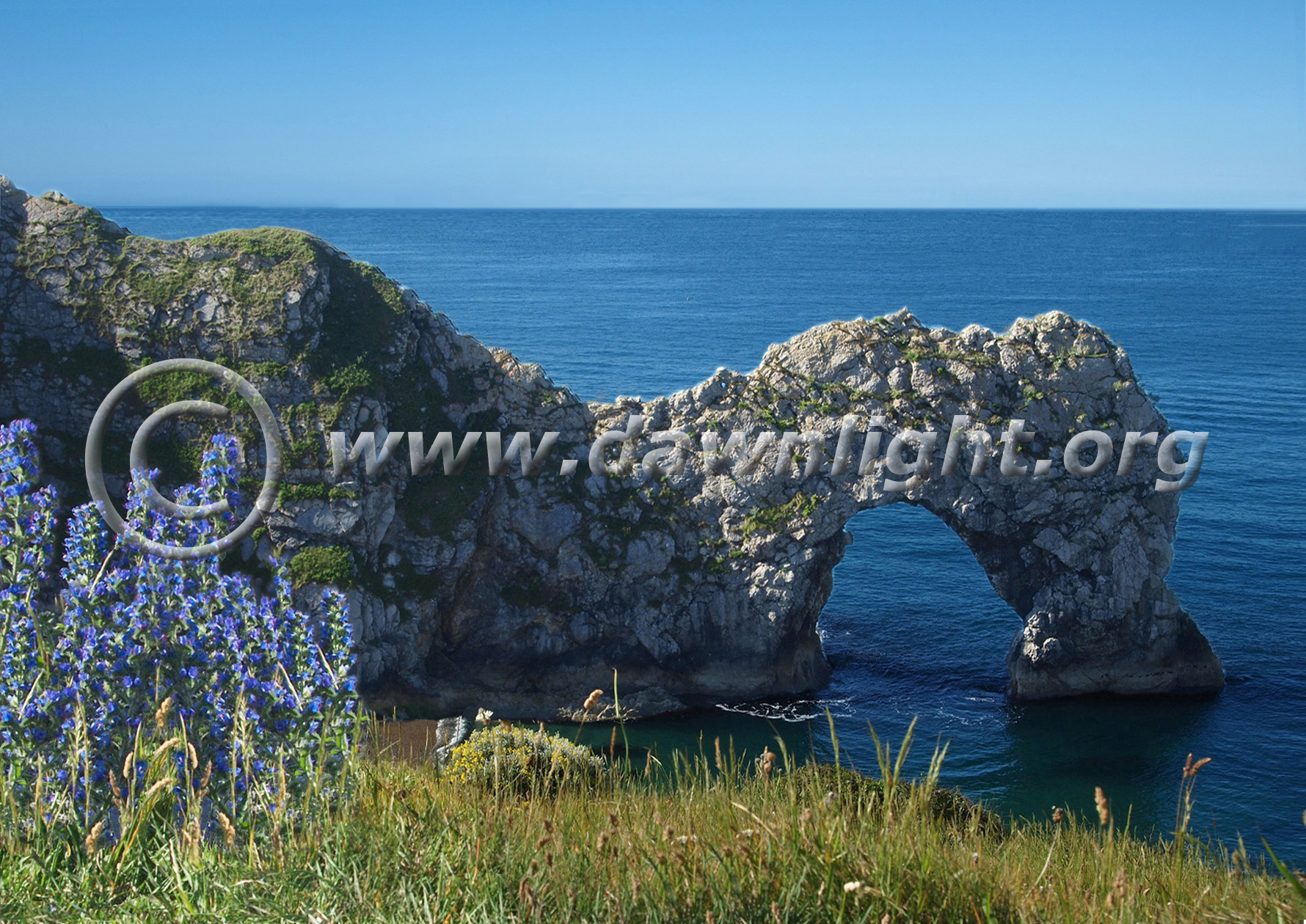
Durdle Door
About 25M years ago the African and European tectonic plates collided, causing massive reverberations through Europe’s geophysical structure. The Alps were formed and this in turn created ripples through the rest of Europe and on into South Dorset. In Durdle Door the hard limestone rock rose almost vertically out of the sea to create a spectacular layered geological formation. The sea eroded the softer limestone beneath leaving the arch we see today. ‘Durdle’ means to pierce, bore or drill and is derived from the word ‘thyrel’ (‘hole’). The Door is popular with tourists, swimmers and kyakers; particularly spectacular is the sight of the sun rising ‘through the keyhole’ between early December and early January.
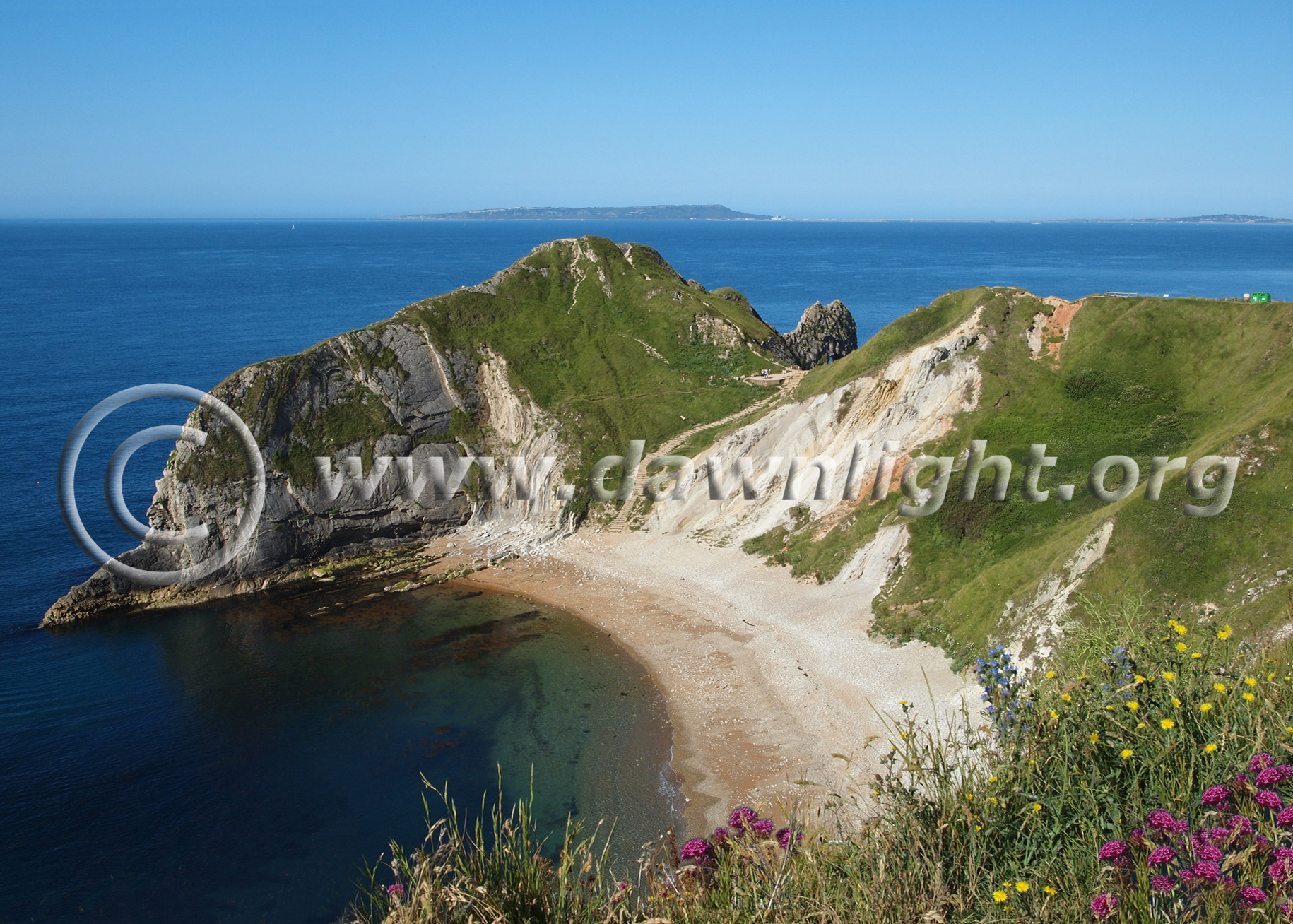
Man ‘o War Cove
Just to the east of the Door on the Jurassic Coast is Man o’ War Cove lying between the headlands of Durdle Door and Man o’ War Head. A scenic path links the two headlands. The official name of the cove given on Ordnance Survey maps is St. Oswald’s Bay. The local name of Man o’ War Bay is thought to have arisen because the rocks in the bay resemble war ships. This part of the coast is particularly prone to rock falls and landslides and in April 2013 80-100 yards of the cliff fell onto Man o’ War beach following a year of above-average rainfall, dumping hundreds of tons of earth onto the beach. Part of the South West Coast path was closed following the incident and the steps down to the beach were cordoned off.
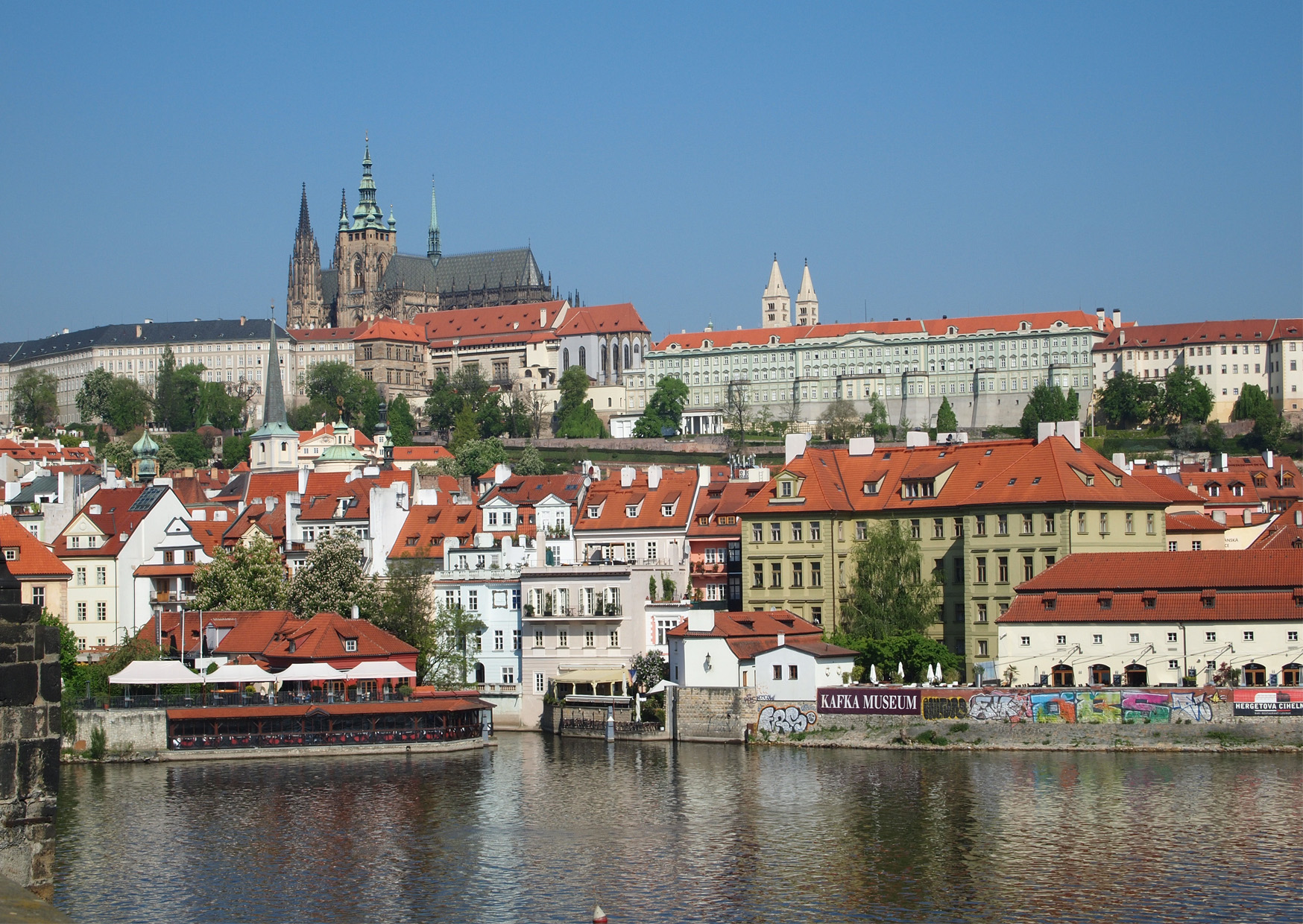
Prague
One of Europe’s great cultural centres, Prague, capital of the Czech Republic, is a UNESCO World Heritage site, its beautiful architecture only saved by US pilots’ navigational errors in World War II. The city has been subject to war and conquest since it was founded in the 9th century. Capital of the Holy Roman Empire in 1355, it was later ruled by the Habsburg dynasty. Following the collapse of the Austro-Hungarian Empire in 1918 it became the capital of an independent Czechoslovakia, but was overrun by the Nazis throughout World War II and invaded again in 1948 by the Communists. It finally gained independence again in 1989 following the Velvet Revolution.
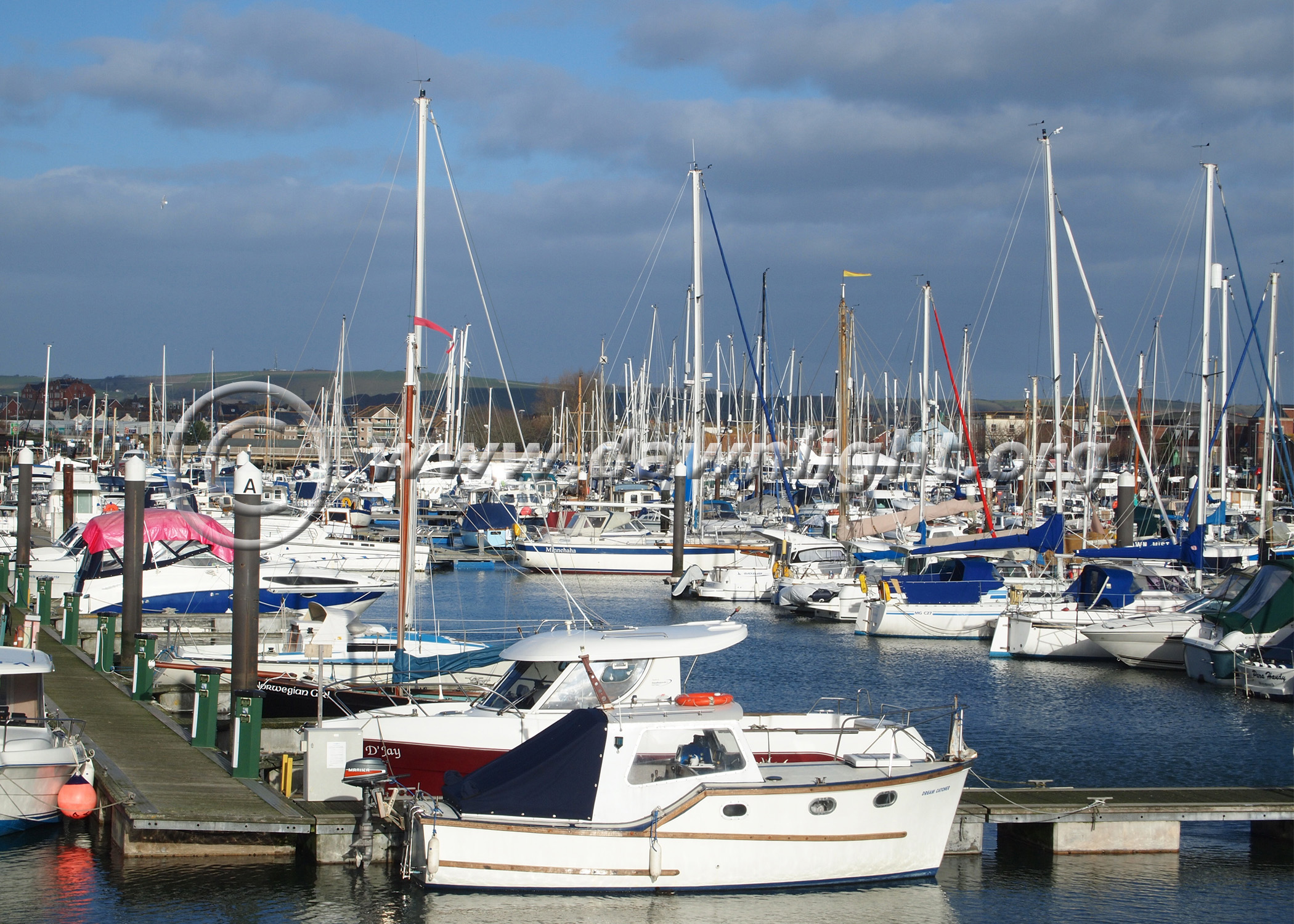
Weymouth Harbour
Weymouth has been a port from ancient times and Roman galleys sailed up the River Wey to unload cargoes destined for the Roman town of Durnovaria, modern-day Dorchester. The Bubonic Plague, also known as the Black Death, spread across the UK from the port as fleas from the black rats aboard ships coming from the Mediterranean infected the local populace. Today the port provides mooring for pleasure boats and yachts and is also home to a few trawlers. There is a bridge across the harbour that opens to let larger boats into and out of the inner harbour. The old harbour with its Georgian waterfront provided a colourful backdrop to Christopher Nolan’s World War II film “Dunkirk”.
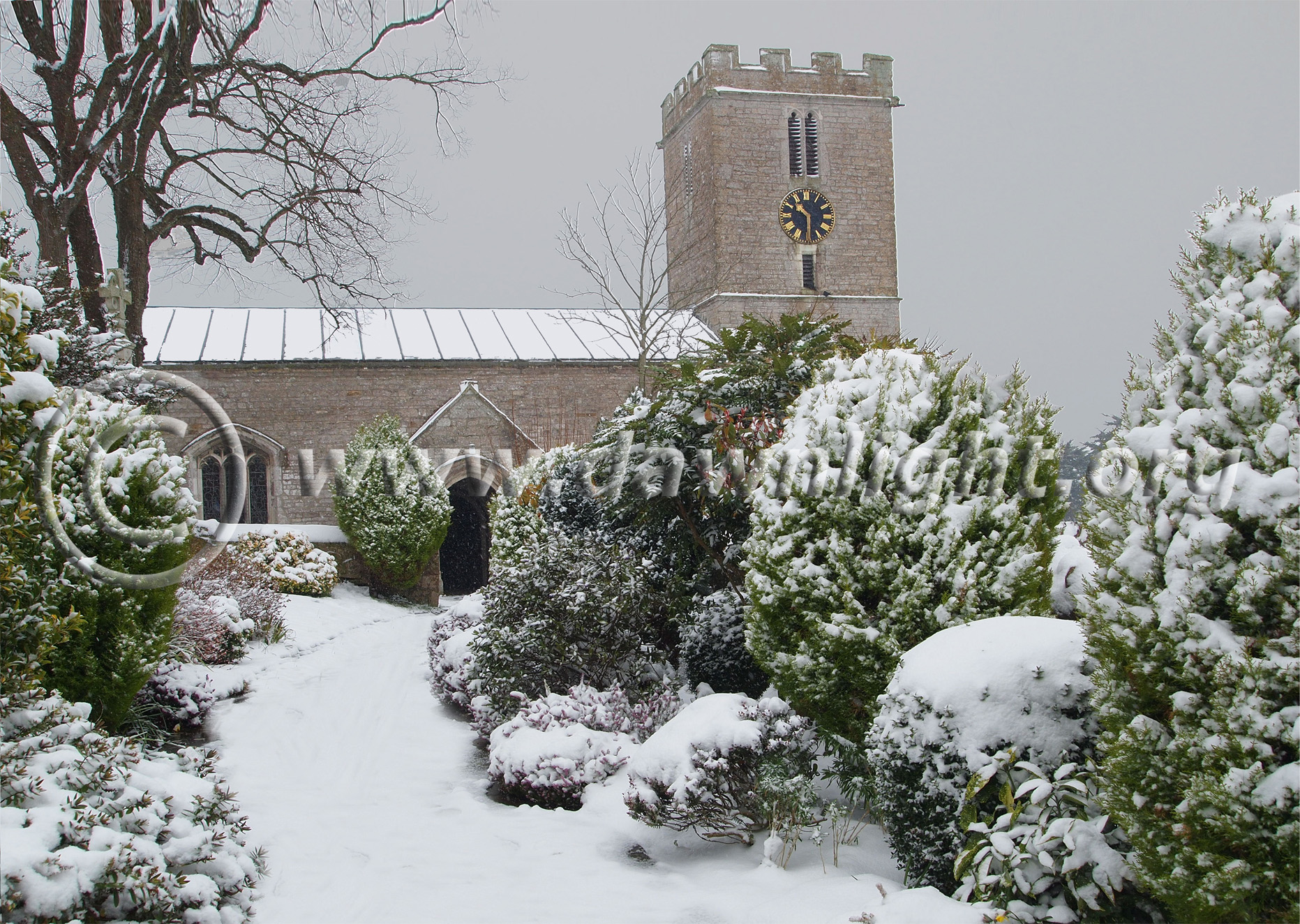
St Andrews Church
St Andrew’s Church in Preston, to the east of Weymouth, was built in the late 14th century in the Gothic or perpendicular style on the site of an earlier Norman church that may have fallen into disrepair following the Black Death. A great deal of restoration work was carried out in 1888. There is a 17th century oak pulpit carved by a former vicar. The wooden rood screen was destroyed in the Reformation but a stone staircase still exists in the south aisle and under the staircase a squint (a tunnel through the wall) allowed worshippers in the south aisle to see the priest. Before the aisle was built, lepers may have been able to watch the service through the squint without entering the church.
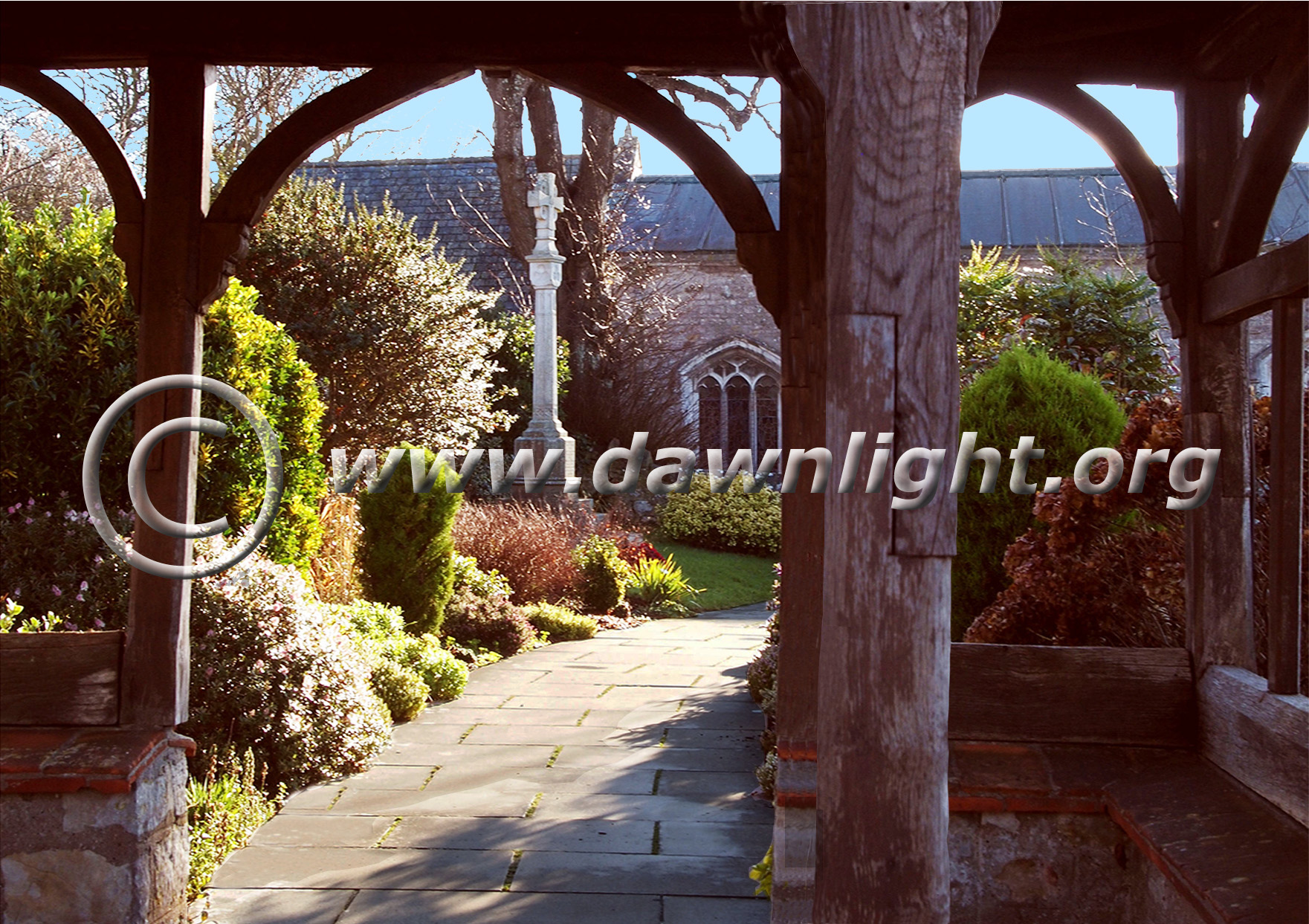
St Andrews Lychgate
St Andrew’s Church in Preston, to the east of Weymouth, was built in the late 14th century in the Gothic or perpendicular style on the site of an earlier Norman church that may have fallen into disrepair following the Black Death. A great deal of restoration work was carried out in 1888. There is a 17th century oak pulpit carved by a former vicar. The wooden rood screen was destroyed in the Reformation but a stone staircase still exists in the south aisle and under the staircase a squint (a tunnel through the wall) allowed worshippers in the south aisle to see the priest. Before the aisle was built, lepers may have been able to watch the service through the squint without entering the church.
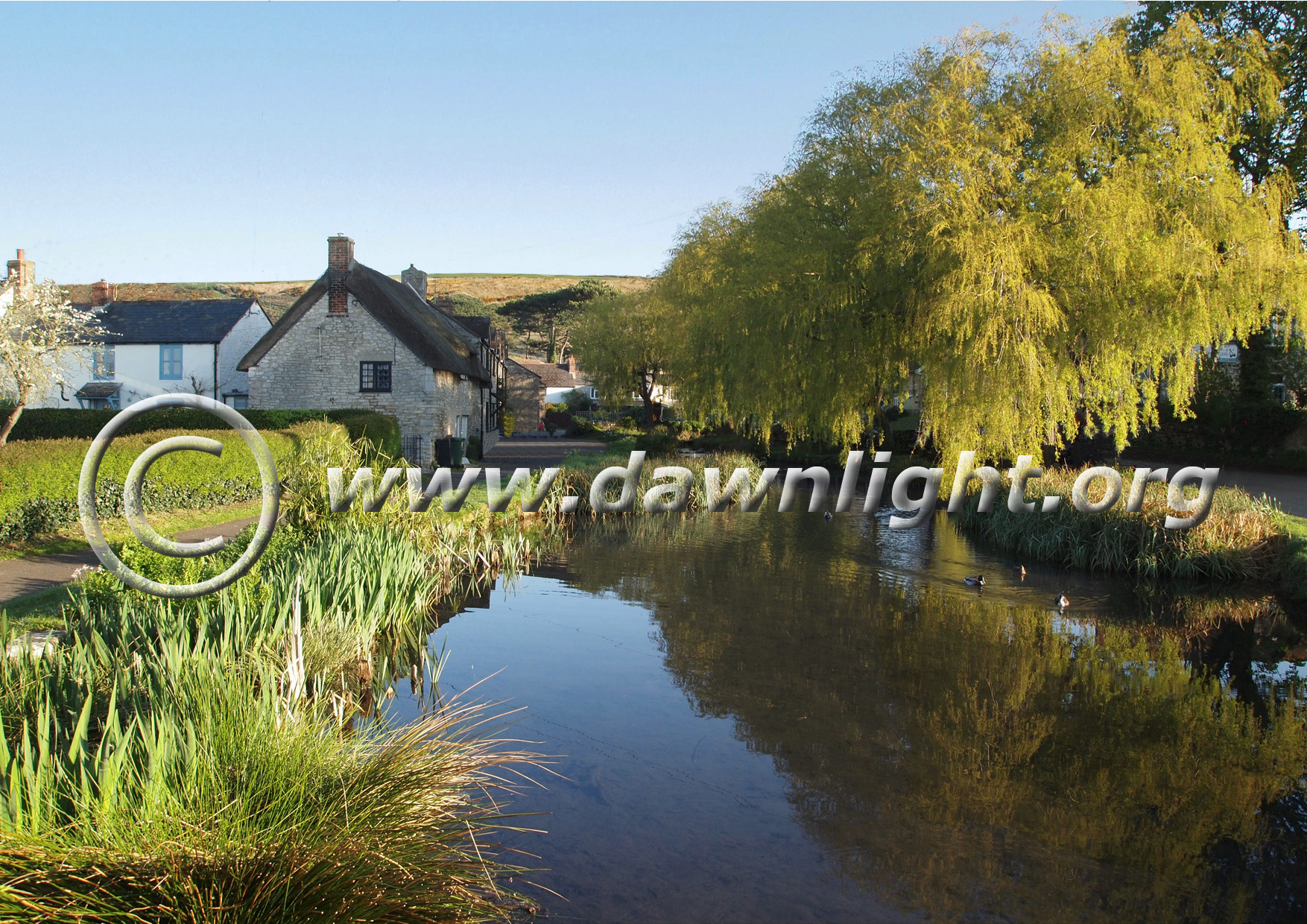
The Millpond, Sutton Poyntz
The village of Sutton Poyntz nestles at the foot of the ridgeway 3 miles north-east of Weymouth. A spring rises to the north of the village and swells into a pond, the Millpond, before joining the River Jordan which flows into the sea at Bowleaze Cove. Just downstream from the Millpond is the old mill built in 1815, a working corn mill until after WWII. It is the inspiration for the mill in the village of “Overcombe” in Thomas Hardye’s “Trumpet Major”. Weymouth Water Company built a water pumping station in 1855 incorporating the funnel from the “Great Eastern” (a Brunel ship) in the filtration system. The funnel was in use until quite recently. The Waterworks supplies Weymouth with water to this day.
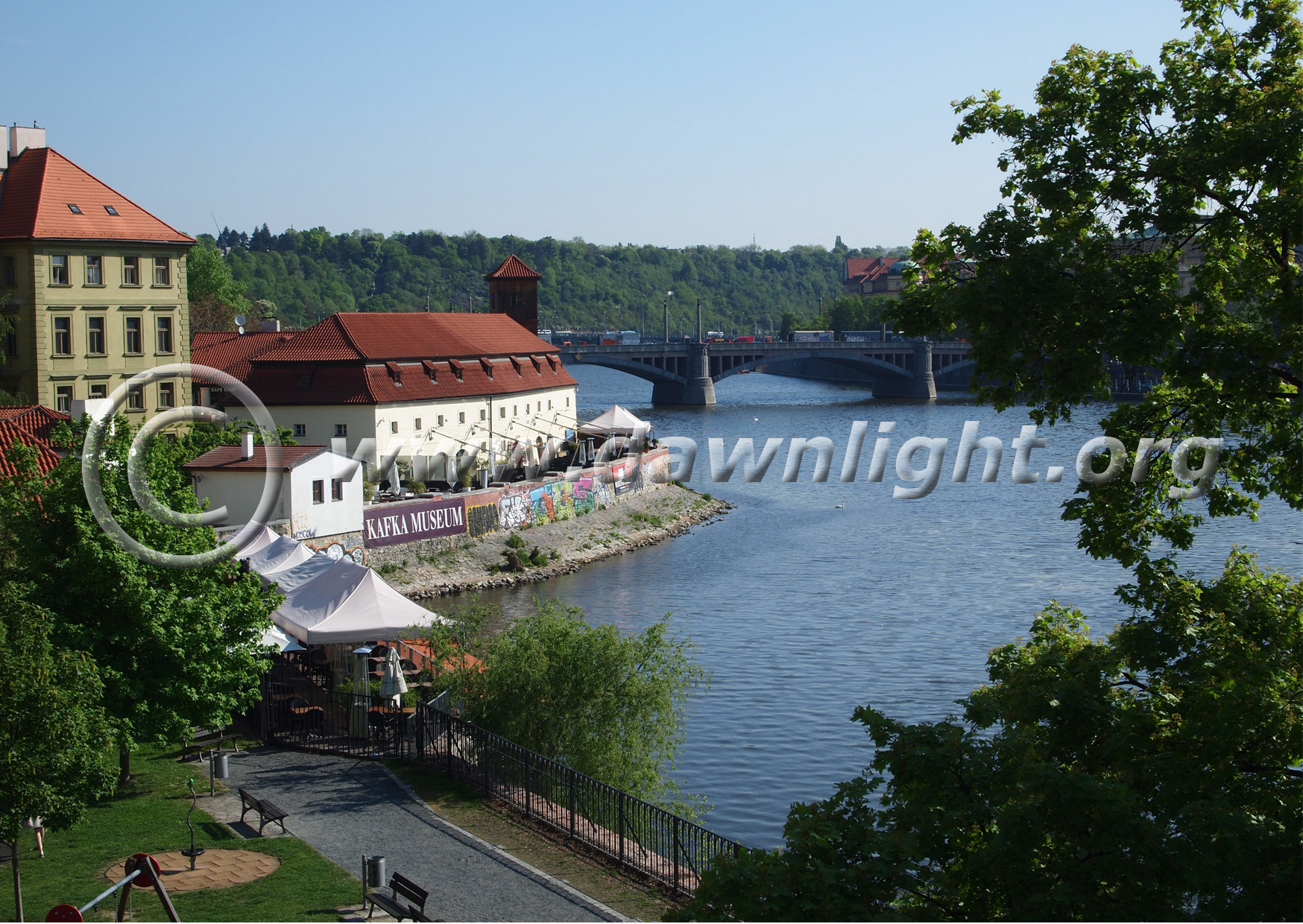
Vitava River, Prague
From its origin, the confluence of two streams in the Bohemian Forest, the Vitava River flows 270 miles through a third of the Czech Republic to end its course in the River Elbe near Melnik north of Prague. The city has developed around this waterway over the last millenium. It has provided water for drinking, crops and navigation. It remained the city’s water source until 1912 and even today is an emergency backup for current sources. On the riverbank is the Kafka Museum celebating the life and work of German-speaking Jewish novelist Franz Kafka, one of the literary giants of the 20th century. In the photo of Prague above, the city’s magnificent castle towers above historic buildings on the Vitava’s waterfront.
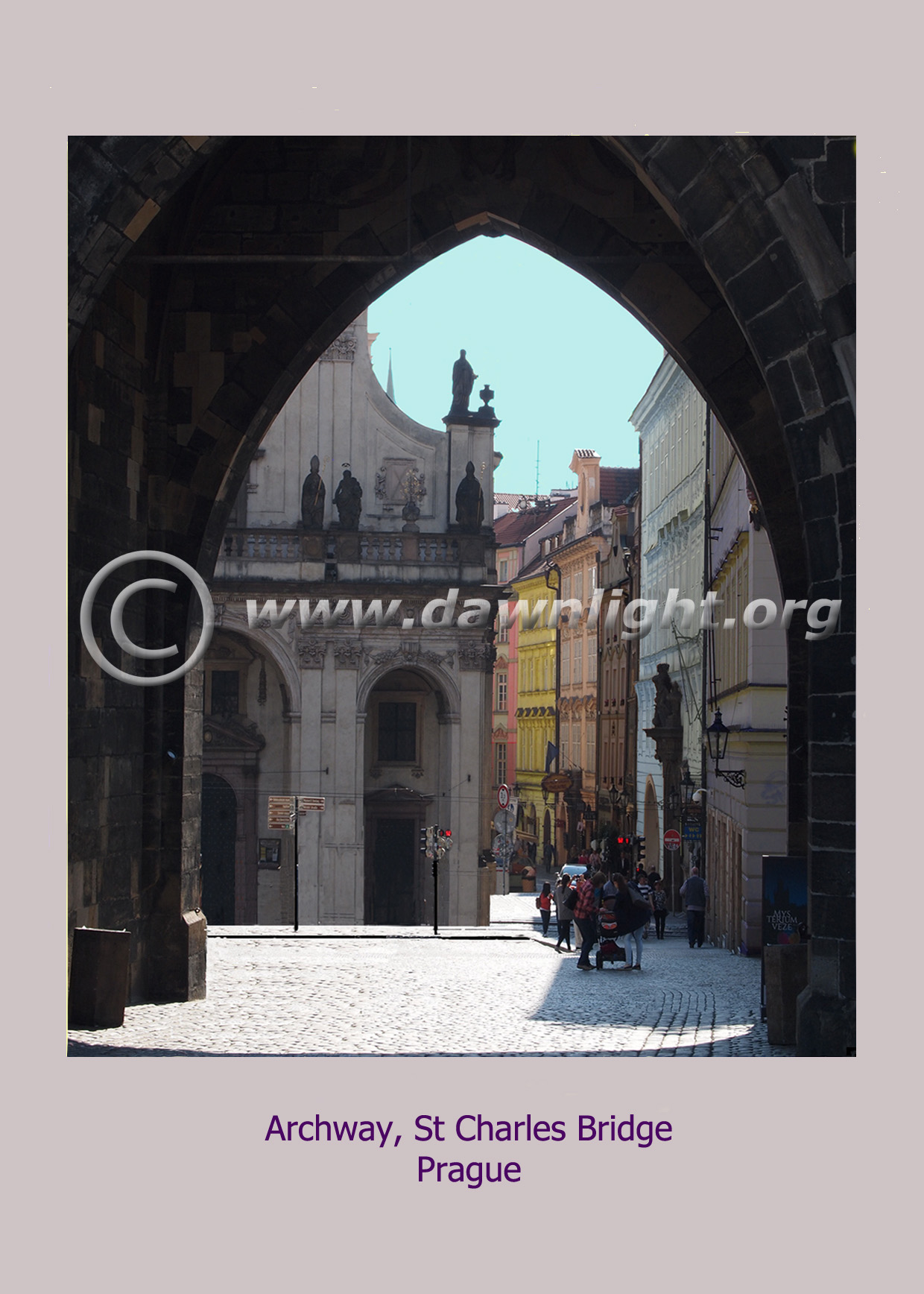
Charles Bridge, Prague
Oldest and most well-known of the 18 bridges spanning the Vitava River is the Charles Bridge built in the second half of the 14th century to replace an earlier bridge that was destroyed in a flood. The new stone bridge was constructed by Charles V, Holy Roman Emperor, in the Gothic style. It is said to have had egg yolks mixed into the mortar to strengthen it and it has survived a number of floods including that of August 2002, the worst for 500 years. Lining both sides of the bridge are 70 statues of saints and notables, the most of which is St. John of Nepomuk who was martyred by being thrown from the bridge into the Vitava in the reign of Wenceslas IV. The bridge connects the Old City to the Lesser City. Looking through the arch one can see the beautiful St Salvator Church which is at the start of the Old City. Home of the Jesuits, the church was built between 1578 and 1654 and is a famous example of early Baroque architechture; sandstone sculptures of saints adorn the porticos on the front facade.
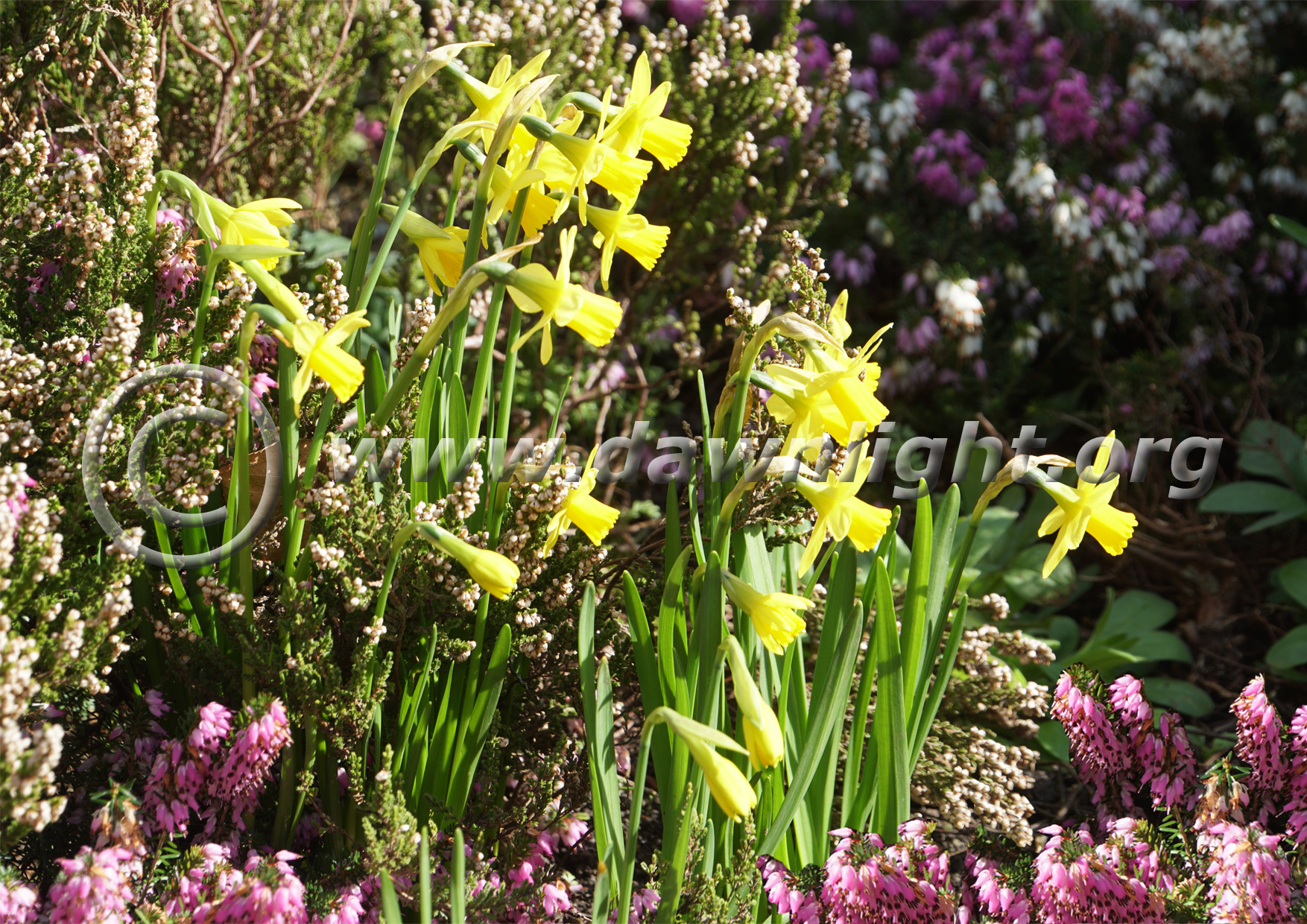
Heather Garden / Daffodils
Heather is a colourful shrub found widely in acid-loving soils in Europe and Asia Minor. It flourishes in damp moorland and heathland especially in Scotland. The derivation may be from old Scottish ‘haeddre’, and it is also called Ling from old Norse ‘lyng’ meaning lightweight. It has been used in mattresses, brooms and tools, dye, traditional medicine and scent.
There are at least 50 species of daffodils with many hybrids. The garden daffodil originated in the southern Mediterranean states like Spain, Portugal and Turkey, and was brought to England by the Romans who thought the sap had healing powers; in fact it is a skin irritant.
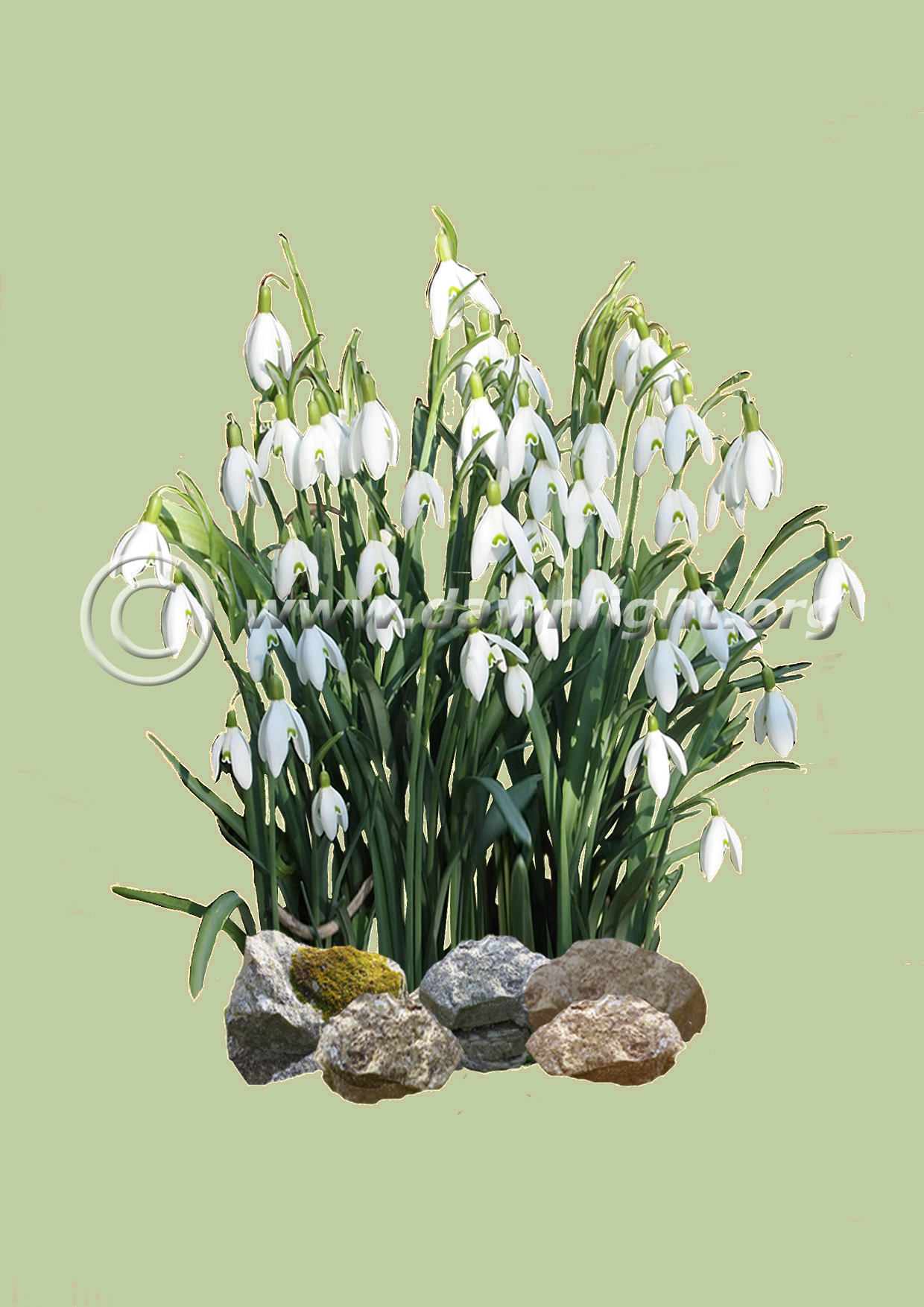
Snowdrops
These delicate white flowers are some of the first to appear in early spring and are widespread in damp regions of Europe and southwest Asia. They flower between January and March and can often by found carpeting shady woodlands. There are over 2,500 varieties of the snowdrop. The latin name is ‘galanthus nivalis’, literally ‘milk flower of the snow’, and they are also known as Candlemas Bells as they flower on Candlemas Day, 2nd February. They have been known from earliest times and were first written about by classical Greek writers in 400BC. Snowdrops are not a native species and may have been introduced to Britain in the 15th century by monks from Italy as they are often found growing in old monestary gardens. Insects seeking to nectar on snowdrops probe the stigma which shakes the stamens and showers the insect with pollen. The inner petals have green markings which glow in ultraviolet light and attract pollinators like queen bumblebees which have the ability to see this light. A naturally occuring substance in the plant, galantamine, is used in the treatment of Alzheimers disease.
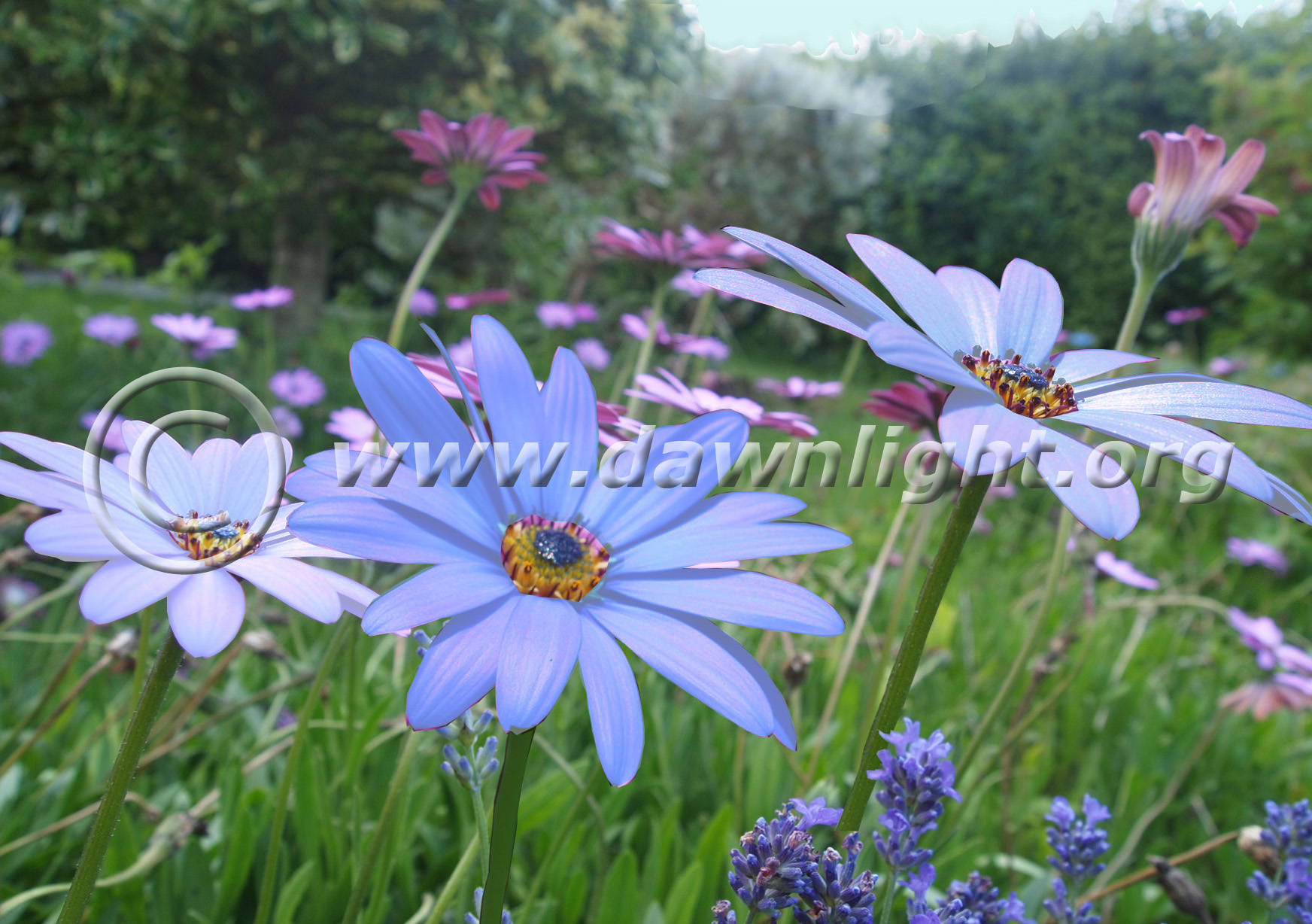
Osteopermum
This popular bedding plant comes in a range of colours such as white, yellow, pink, blue and mauve. It flowers in mid summer. Hardier varieties (see photo) usually have dark blue centres until the yellow pollen is shed. The centres glisten like jewels in the summer sun; the petals close up when the sun sets. The name osteopermum comes from Greek ‘osteon’ meaning ‘bone’ and Latin ‘spermum’ meaning ‘seed’. The flower originates in Africa and also in the southwestern Arabian peninsual; it is also known as the African Daisy and the Cape Daisy. It is a half-hardy perennial and ‘Stardust’ apparently survives winters on the Yorkshire moors. The ‘fruticosum’ variety has run rampant on the coasts of North Island, New Zealand, where it has been classified as a weed.
Dahlias
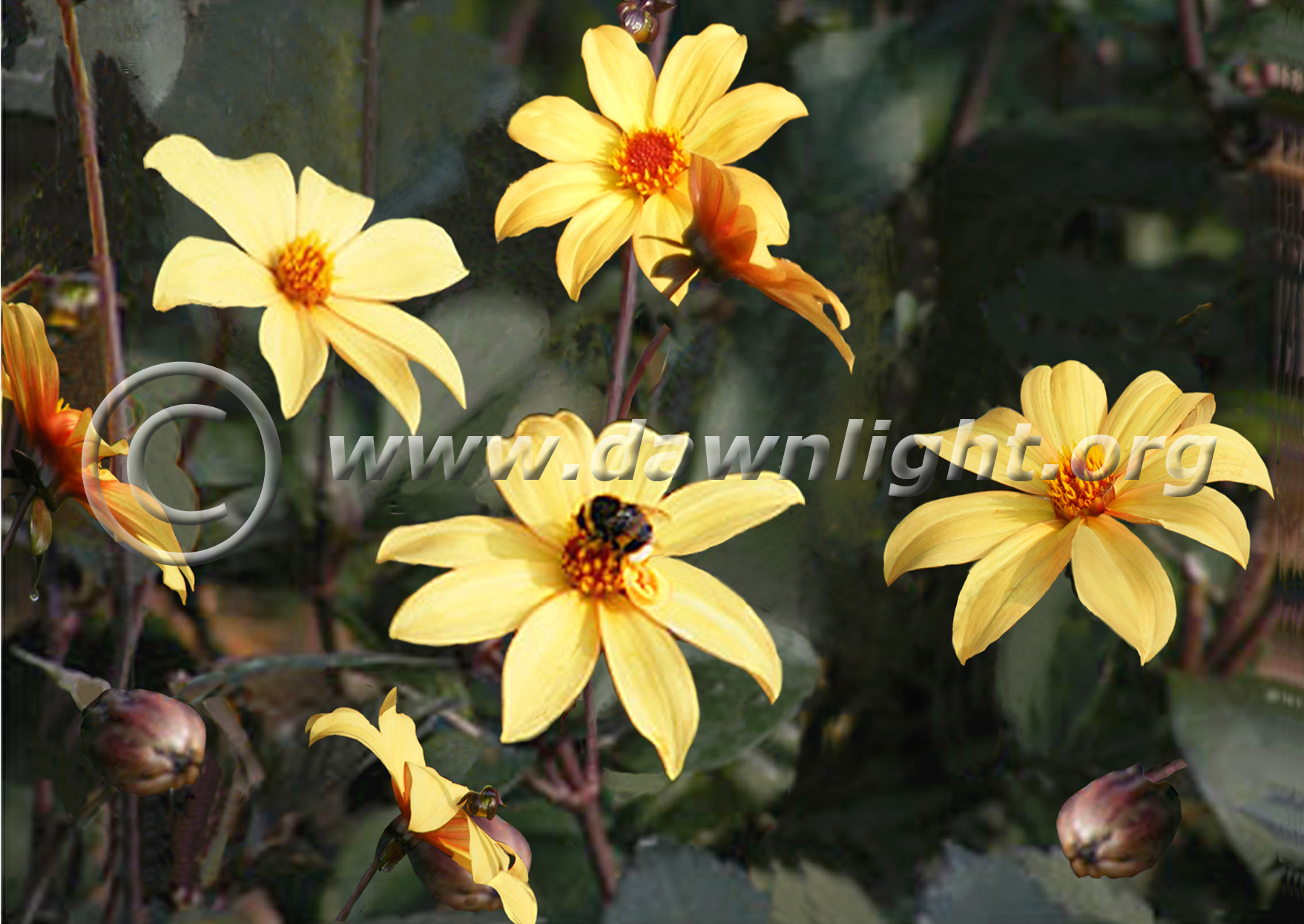
These dazzling flowers bloom in late summer. Native to Mexico they were made Mexico’s national flower in 1963. The plant has a tuberous root and the Aztecs cultivated it using the tubers as a food crop, but this died out after the country’s colonisation by Spain; Europeans attempted to grow the crop but failed. The Aztecs also used the dahlia for medical purposes to treat epilepsy, and in construction they employed the hollow stems of the plant for water pipes. The dahlia was named after Anders Dahlin 1791, a famous Swedish naturalist. The flower comes in a wide variety of colours, shapes and sizes, making it a favourite of florists and gardeners alike. The Single Dahlia, shown in the picture, is particularly attractive to bees, butterflies and other pollinating insects.
Fuchsia
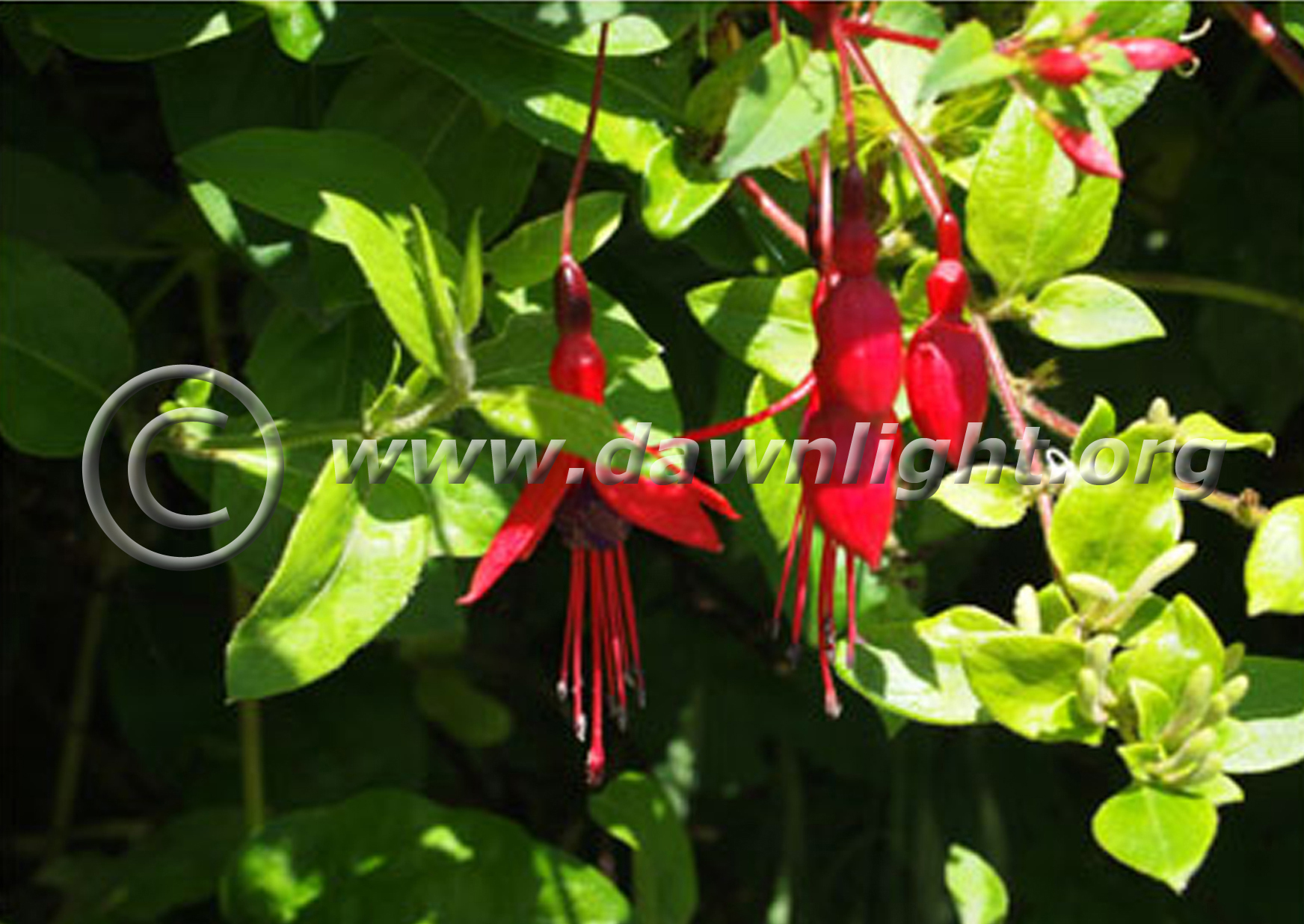
The Fuchsia, also known as ‘Ladies Eardop’, is native to Central and South America, New Zealand and Tahiti, and belongs to the evening primrose family. There are around 110 species, the hardy varieties being grown in the northern hemisphere. The plant was first discovered by a French monk and botanist, Charles Plumier, in the Caribbean at the end of the 17th century and he named it after Leonhart Fuchs, a renowned German botanist who lived a century earlier. Its popularity reached its zenith in Victorian times but declined during the First World War when greenhouses were used for growing food. All fuchsias are edible, the best tasting of lemon and black pepper, the worst being flavourless or leaving a bad after-taste in the mouth. Certain varieties make good jam.
Aquilegia
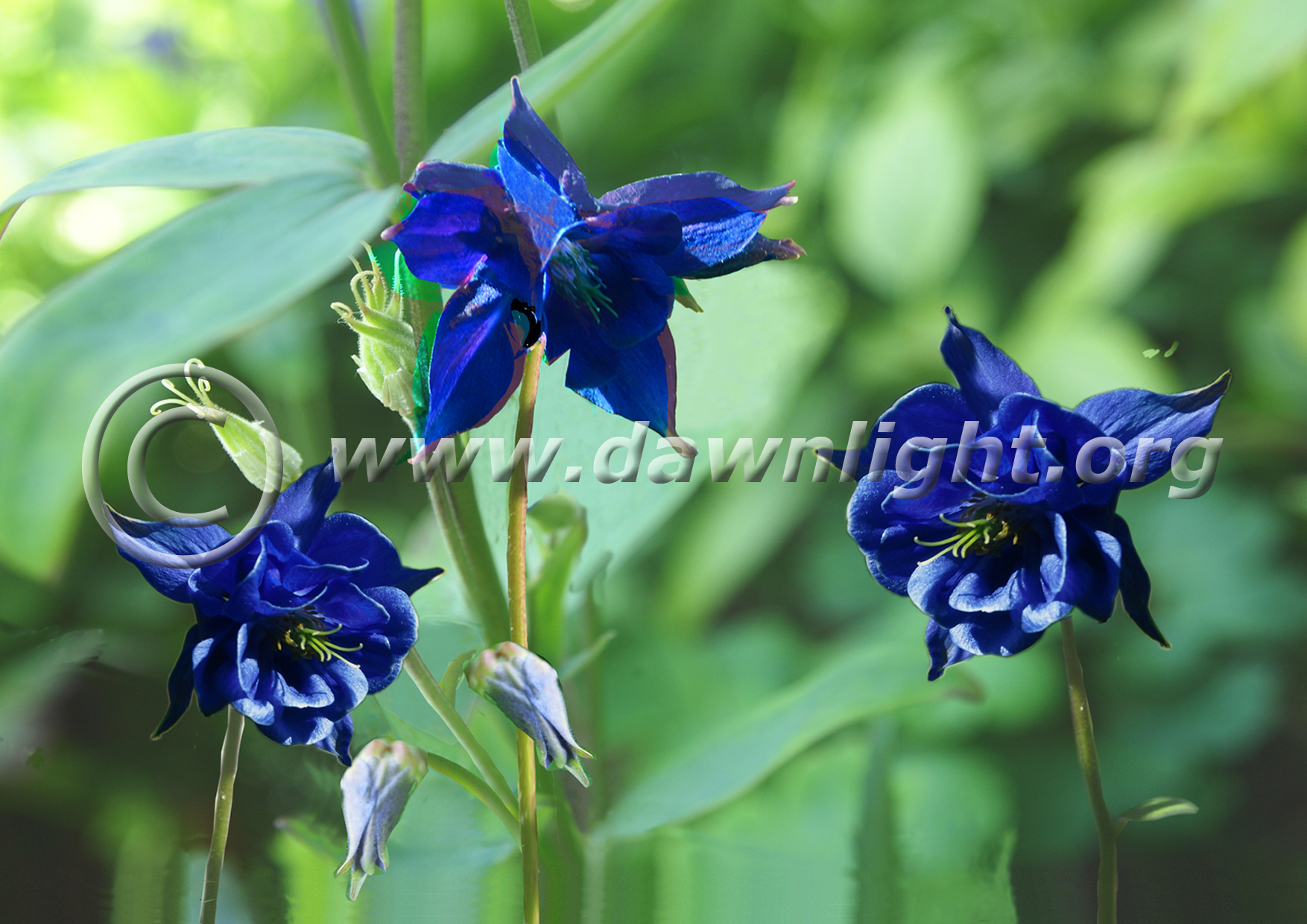
These beautiful blooms are native to temperate regions of Europe, Asia and North America. They flourish in meadows and woodlands and are a popular garden plant. There are 60 species, not including hybrids. The name Aquilegia is from the Latin ‘aquila’ meaning eagle, because the petals are said to resemble an eagle’s talons. They are commonly called ‘colombines’ or ‘granny’s bonnet’. They come in a wide variety of colours including white, pink, red, purple and blue. The blue aquilegia is Colorado’s state flower and is also known as the Rocky Mountain blue. Native Americans use them in small quantities to flavour salads (they are very sweet) and to treat ulcers, heart palpitations and fevers. However the seeds and roots are highly toxic.
Wildflower Meadow
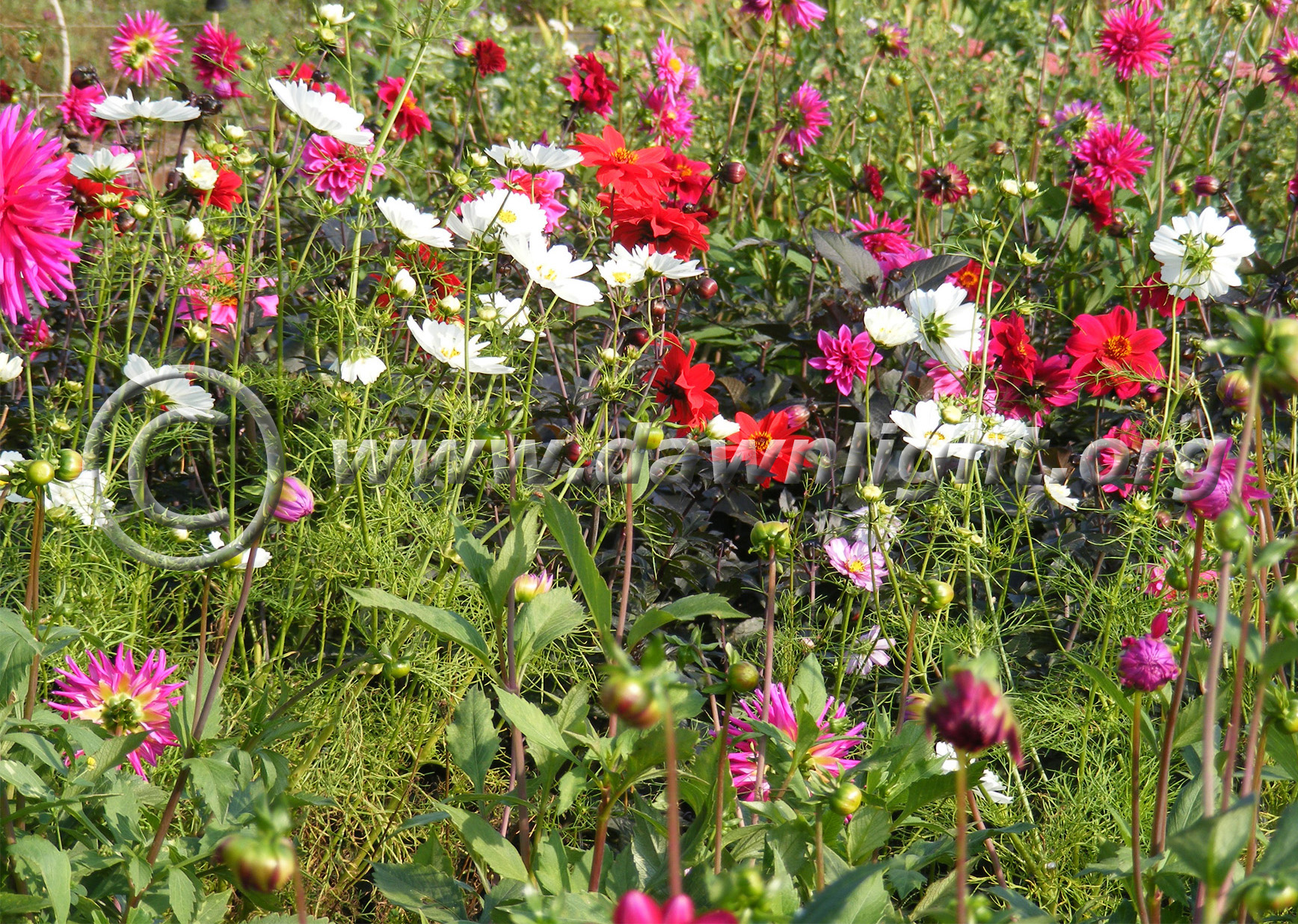
Over the last 100 years we have lost over 95% of our wildflower meadows in the UK owing to changes in agriculture, drainage, the use of pesticides and urban development. This has had a devastating effect on the insect population and the number of wildflower species and has increased pollution. It has particularly affected the bee, the bumblee in particular has reduced by 70% over the last 30 years owing to change of habitat and disease. We rely on bees for food and oxygen as they pollinate flowers and trees which would eventually die if unable to seed. Wildflower meadows create plant biodiversity, attracting insects, birds and mammals, help tree and root growth, reduce pollution, prevent the spread of noxious weeds, and their beauty enriches urban environments.
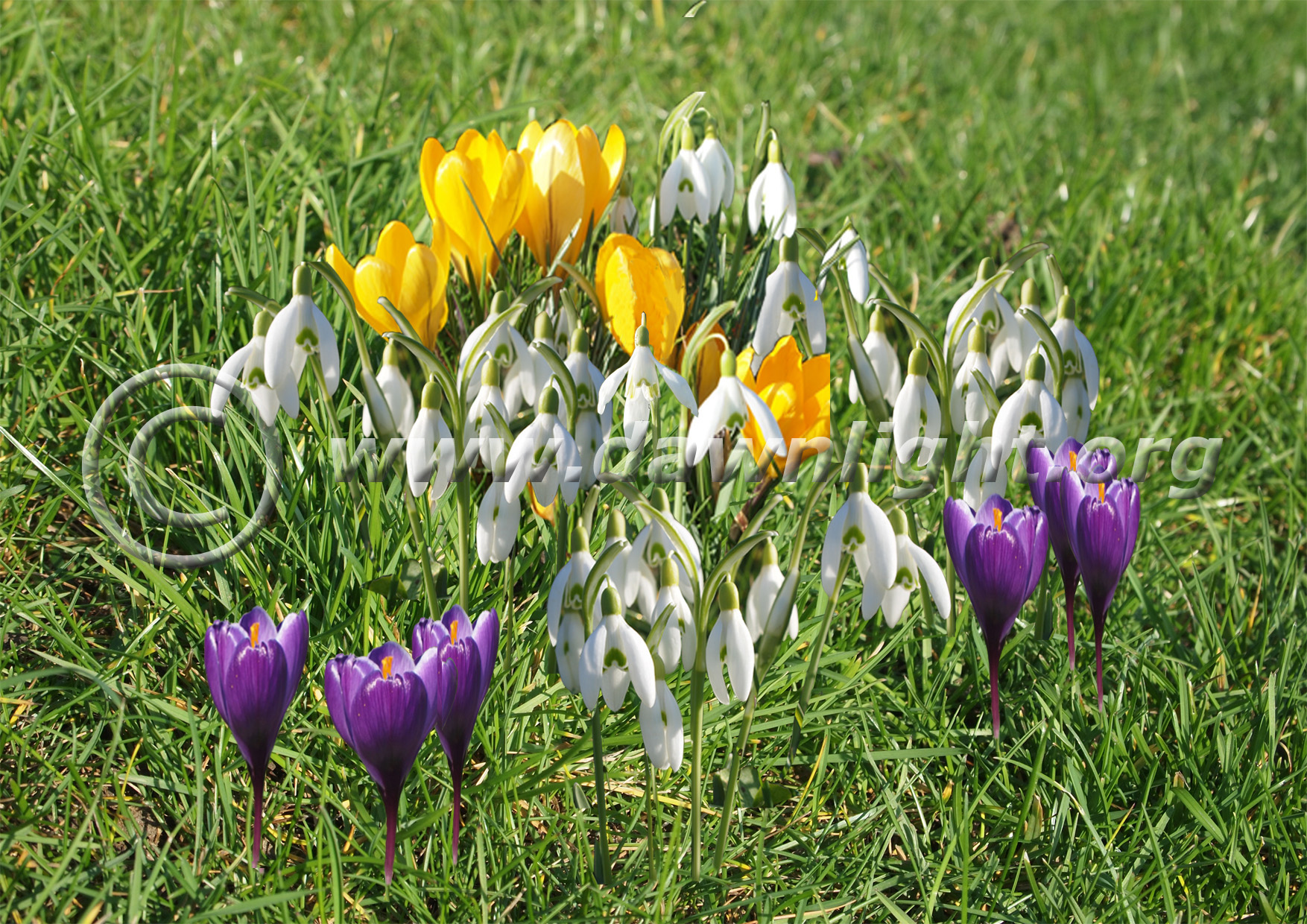
Spring Flowers
Snowdrops and crocuses bring a vivid splash of colour to the garden in spring. Information about the snowdrop is given below. The crocus is a genus of the iris family and is found in Europe, North Africa, the Middle East and Asia. It is a spring, autumn and winter flowering plant. Saffron, used in dye, seasoning and medicine, comes from an autumn flowering species and its first known use is in Crete where it is portrayed in frescoes. The Greeks wrote about it in 300BC and British varieties probably come from Greece and Turkey. Saffron was introduced to Saffron Walden in Essex by Thomas Smith, Secretary of State to Edward V1, so that the village could have a new industry. It was widely used in commerce in the UK in Elizabethan times.
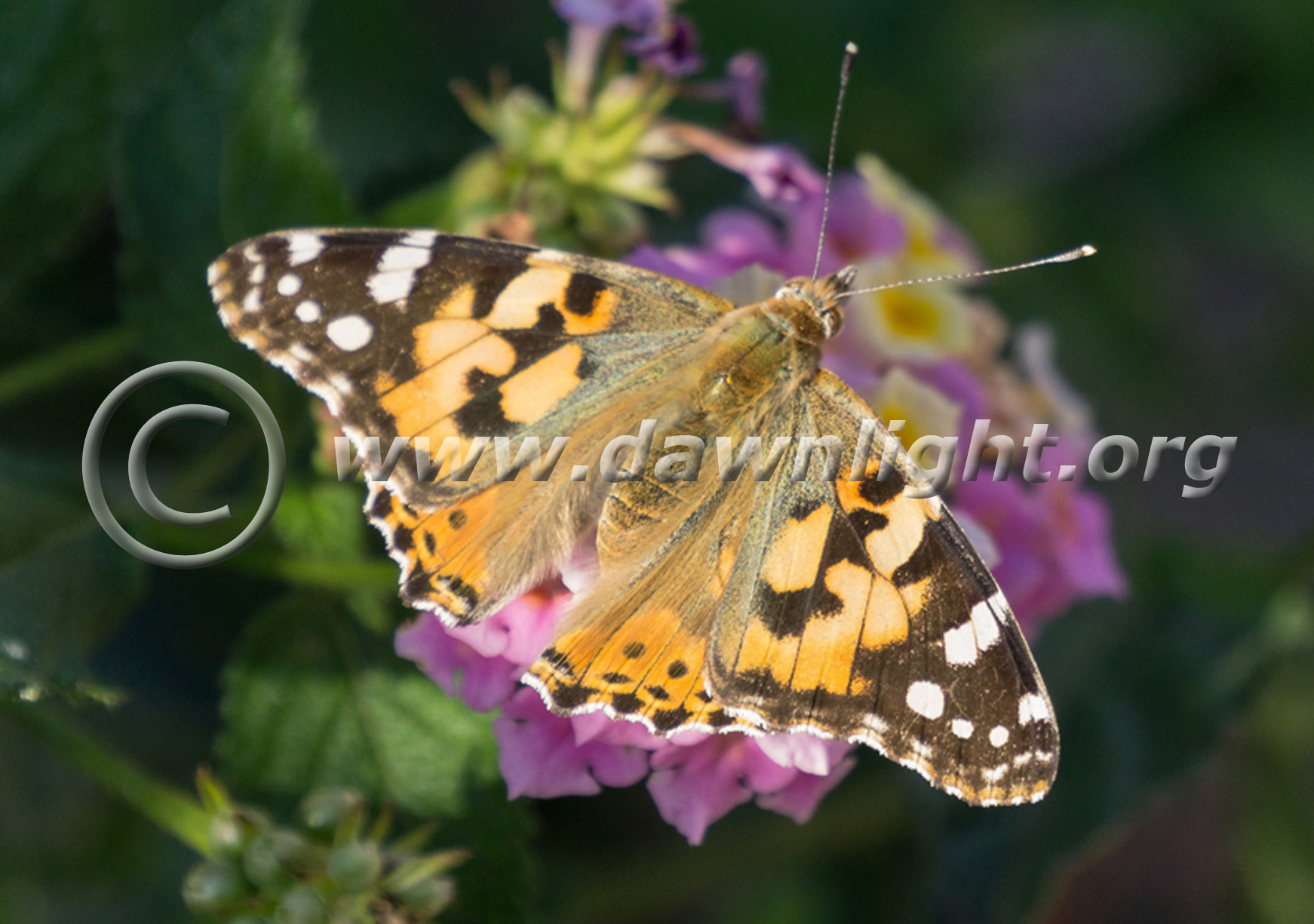
Painted Lady Butterfly
These common but beautiful butterflies migrate vast distances in the spring from North Africa, Asia and Europe, arriving in the UK from May to July and sometimes reaching the Shetland Islands and even Iceland, where it is the only known butterfly. Large butterfly colonies flying in from the sea in a good year make a spectacular sight. They nectar on thistles, knapweed and a wide variety of cultivated flowers. The females lay up to 200 eggs, each one on a separate leaf. The caterpillars weave an intricate shield of leaves around themselves as protection against flies which devour them from the inside out. When the butterflies first emerge from their cocoons they are a delicate salmon-pink, however this soon mutes into the adult’s characteristic darker shades.